
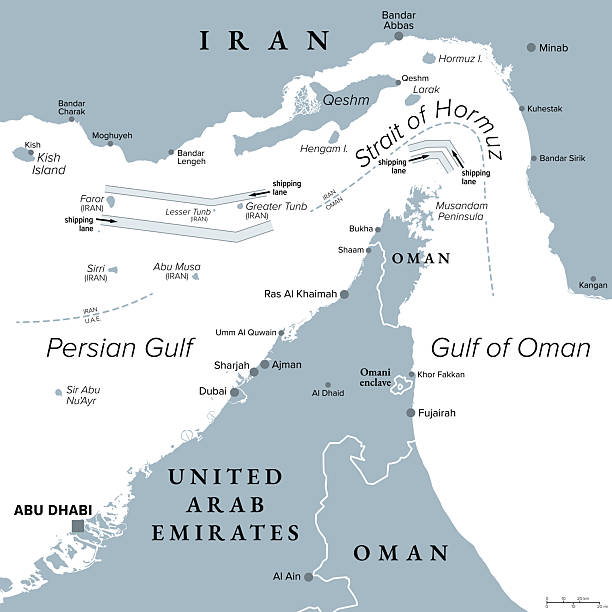

The news that Iran threatens to close Strait of Hormuz has raised serious concerns across global energy markets, international shipping industries, and geopolitical circles. The Strait of Hormuz is one of the most strategically important waterways in the world, serving as the main gateway for oil exports from the Persian Gulf to global markets.
Whenever tensions rise in the region, the possibility of Iran restricting or closing the strait quickly becomes a major international issue. This is because a large portion of the world’s oil and natural gas shipments pass through this narrow waterway every day.
Recent developments involving military conflict and geopolitical tensions in the Middle East have once again brought the Strait of Hormuz into the spotlight. Governments, energy companies, and investors around the world are closely monitoring the situation due to its potential impact on global energy security.
What Is the Strait of Hormuz?
The Strait of Hormuz is a narrow waterway located between Iran and Oman. It connects the Persian Gulf with the Gulf of Oman and eventually the Arabian Sea, allowing oil tankers and cargo ships to reach international markets.
Despite being only about 33 kilometers wide at its narrowest point, the strait carries an enormous volume of global energy shipments. Energy analysts estimate that roughly 20% of the world’s oil supply moves through the Strait of Hormuz every day.
Countries such as Saudi Arabia, Iraq, Kuwait, Qatar, and the United Arab Emirates depend heavily on this route to export oil and liquefied natural gas.
Because of its importance, the strait is often described as the world’s most critical oil transit chokepoint.
Why Iran Is Threatening to Close the Strait
The recent headlines about Iran threatening to close the Strait of Hormuz are closely linked to escalating military and political tensions in the region.
Recent conflict involving Iran and Western powers has intensified security concerns in the Persian Gulf. In March 2026, U.S. airstrikes targeted military facilities on Iran’s Kharg Island, a strategic hub for Iranian oil exports.
Following these developments, Iranian officials signaled that blocking the Strait of Hormuz could be used as a strategic response to foreign military actions. Such threats are often used as leverage in geopolitical disputes because of the strait’s enormous economic importance.
Even the possibility of a blockade can create uncertainty in energy markets and international shipping routes.
Global Impact of a Possible Closure
If Iran were to fully close the Strait of Hormuz, the consequences could be severe for the global economy.
Energy analysts warn that a disruption in the strait could immediately reduce oil supply to international markets. Oil prices could surge rapidly as traders react to the possibility of shortages.
Reports suggest that shutting down the strait could remove millions of barrels of oil from the global market every day. This would likely trigger sharp increases in fuel prices worldwide and add pressure to inflation in many countries.
The economic impact would be especially significant for countries that rely heavily on imported oil, particularly in Asia.
Shipping Disruptions and Security Risks
The threat to close the Strait of Hormuz has already created concerns among shipping companies and maritime security experts.
Commercial vessels traveling through the region face increased risks due to military activity, drone attacks, and naval patrols. Security analysts warn that the maritime environment in the Persian Gulf has become increasingly volatile due to ongoing hostilities.
Some shipping companies have temporarily delayed routes or increased security measures when navigating the area. Insurance premiums for vessels passing through the strait can also increase during periods of heightened tension.
Even limited disruptions can have significant effects on global supply chains.
Military Presence in the Region
The strategic importance of the Strait of Hormuz has led to a strong military presence in the region. Several countries maintain naval forces in the Persian Gulf to protect commercial shipping and ensure freedom of navigation.
These naval patrols are designed to deter attacks on vessels and maintain stability in one of the world’s busiest maritime corridors.
However, the presence of multiple military forces in close proximity also increases the risk of accidental confrontations or misunderstandings.
This complex security environment contributes to ongoing geopolitical tensions surrounding the strait.
Could Iran Actually Close the Strait?
Although Iran has repeatedly threatened to close the Strait of Hormuz, many experts believe a complete and long-term closure would be difficult to sustain.
The waterway is used not only by foreign oil exporters but also by Iran itself. Much of Iran’s own oil exports depend on the strait, meaning a full blockade could harm the country’s own economy.
Furthermore, international naval forces operating in the region would likely attempt to reopen the waterway if shipping traffic were blocked.
However, analysts warn that Iran does not need to completely close the strait to create disruption. Even limited attacks, naval maneuvers, or threats could slow down shipping traffic and increase market uncertainty.
Impact on Global Energy Markets
The possibility that Iran threatens to close Strait of Hormuz has already had an impact on energy markets.
Oil traders closely monitor developments in the region because disruptions could affect supply levels and price stability. Whenever tensions escalate, oil prices often rise due to fears of reduced exports from Gulf countries.
Energy analysts note that even temporary disruptions could create ripple effects across global markets, affecting industries such as aviation, manufacturing, and transportation.
Because energy is a fundamental part of modern economies, stability in the Strait of Hormuz remains a top international priority.
Diplomatic Efforts to Prevent Escalation
Despite rising tensions, many countries are pushing for diplomatic solutions to prevent a full-scale crisis in the Strait of Hormuz.
International leaders have called for dialogue and de-escalation in order to maintain safe navigation through the waterway. Some countries are also exploring alternative energy routes and pipelines to reduce reliance on the strait.
Diplomatic negotiations remain essential for preventing a conflict that could disrupt global energy supplies.
Conclusion
The threat that Iran could close the Strait of Hormuz highlights the fragile balance between geopolitics, energy security, and global trade. This narrow waterway plays a crucial role in transporting oil and gas from the Middle East to the rest of the world.
Even the possibility of disruption can send shockwaves through financial markets and international shipping industries.
As tensions continue to evolve in the region, governments, energy companies, and investors will remain focused on developments in the Strait of Hormuz. The future of this critical shipping route will depend largely on diplomatic efforts and international cooperation aimed at maintaining stability in one of the world’s most important energy corridors.

